
- <strong>The real sugar problem was created by the food industry</strong>
- The famous sugar mouse study used soda, not fruit
- What the biggest human studies actually show
- How fruit actually protects you
- The other big lie: that keto and carnivore starve cancer
- The animal-protein side of keto is a cancer problem of its own
- The real issue is carb quality, not carbs THEMSELVES
- Why is this lie everywhere?
- What the evidence actually says to do
- Citations
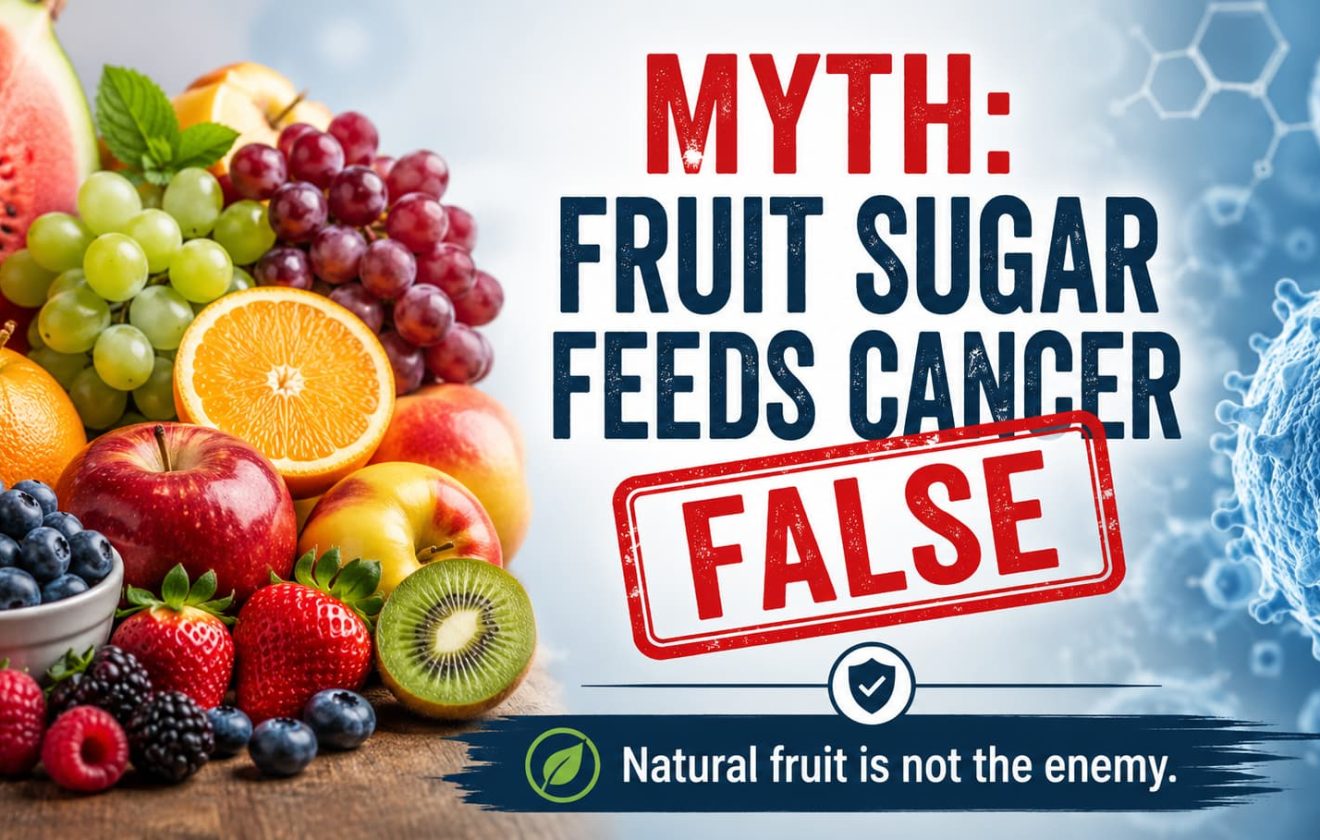
One of the most common questions I get is about fruit, especially when it comes to cancer. There’s a strong push among natural health influencers right now telling people to stop eating fruit because “fruit sugar feeds cancer.” Let’s actually look at what the science says.
The people pushing this idea start with a real but misunderstood and misapplied fact: cancer cells can use sugar, but then jump to a conclusion that isn’t even remotely true: that eating fruit feeds cancer and tumors. That leap is not only unprovable, it is directly contradictory to both scientific study and historical precedence. Not to mention scripture which tells us that God gave us fruit for our food and that it was good.
Nature operates on a simple principle: God only makes that which is good, and His food is objectively good and given for our benefit, therefore it cannot harm us. Many have adopted the mystical principles of the yin and the yang. The belief that a thing can be both good and bad depending on circumstances or the person. But that is not a principle you will find in the Bible.
In the largest review of fruit consumption ever done, published by Aune and his team in 2017, they looked at 95 long-term studies covering roughly two million people. What they found was clear: every extra 200 grams of fruit per day (roughly one large apple or a cup and a half of berries) was linked to less cancer and a lower risk of dying from any cause.(1)
Whole fruit is one of the most consistently protective foods in the entire body of cancer research. Yet there’s no major movement encouraging people to eat the food that has actually been proven unequivocally to help. The mechanisms are understood so well that big pharma has spent billions trying to copy them.
But instead of promoting what God said was good, many of the health educators of this world are doing the exact opposite. They tell people to cut fruit and replace those calories with low carb diets or meat and dairy — foods even the World Health Organization’s own cancer agency has officially labeled as carcinogenic or probably carcinogenic.(2)
The real sugar problem was created by the food industry#
Before we get into specific studies, we need to be clear about something: whole fruit and industrial sugar are not the same thing. They behave completely differently inside your body.
God designed fruit as a complete package. A average apple has about 9 grams of fructose (fruit sugar), but it also comes with 4 grams of fiber, a lot of water, and over a thousand different protective plant compounds called polyphenols. The fiber in the apple forms a gel in your gut that slows digestion, which means the sugar trickles into your bloodstream slowly instead of flooding it. The way God designed for digestion of sugar.
The polyphenols actually regulate some of the sugar being absorbed. The fiber feeds incredibly beneficial bacteria in your gut, which then produce a compound called butyrate which is a substance so powerful at fighting cancer that drug companies are spending billions trying to make a synthetic version of it.(3)
If you look at the official glycemic index tables that rank how quickly foods spike blood sugar, whole fruit scores low across the board. Cherries, grapefruit, apples, pears, peaches, oranges — all of them release their sugar slowly.(4)
Now compare that to a 12-ounce can of soda. It contains 23 grams of pure liquid fructose. No fiber. No polyphenols. No pulp. Nothing to slow it down. The food industry took fructose out of corn, chemically manipulated it to be sweeter than regular sugar, dissolved it in water, and started selling it to us by the truckload. Americans went from eating almost no high-fructose corn syrup in 1970 to over 60 pounds per person per year by the early 2000s.(5)
Cancer rates and metabolic disease have skyrocketed alongside this stupendous increase of man-made toxic sugar. The food industry created a real sugar crisis. It’s in the soda, the candy, the cereal, the salad dressings, the bread, the energy drinks and all the ultra processed stuff loaded with added fake sugar.
Then a second industry showed up to “fix” the problem. The health educators who tell us to cut out sugar, and then quietly expanded the definition of “sugar” to include the whole fruit that the biggest studies in the world have proven actually protects us. Much of this is ignorance from lack of study but it is not excusable.
The famous sugar mouse study used soda, not fruit#
The study that gets cited over and over by anti-fruit influencers is a 2019 paper from Lewis Cantley’s lab, one of the most respected and cited cancer researchers alive.(6) Here’s what actually happened in that study:
Researchers took mice that were genetically programmed to develop intestinal tumors. They gave these mice a daily dose of high-fructose corn syrup. The dose was the equivalent of a human drinking one can of soda per day. The tumors grew bigger.
That’s it. That’s the study. It was soda, not fruit.
Here’s what the senior author himself said to journalists, repeatedly: the study tested high-fructose corn syrup, not whole fruit. The fiber in whole fruit changes how sugar is absorbed entirely. He explicitly warned people not to extrapolate his findings to eating fruit. Another author of the paper said the same thing.
Then in late 2024, a follow-up study in Nature added even more clarity. The researchers showed that tumors can’t actually use the sugar from fruit directly. The actual mechanism for tumor growth only kicks in when a fast, large dose of fructose hits the liver all at once, like what happens when you chug a soda. The liver then converts that sugar into a fat-like compound, and that compound is what tumors actually grow from. Whole fruit, absorbed slowly through fiber over an hour, can’t create that kind of sugar surge. The dangerous mechanism literally depends on a delivery method that whole fruit can’t provide.(7) But processed sugar can and does.
If you need proof of this from human research, look at the Harvard study by Muraki and colleagues in 2013. They pooled data from three of the biggest nutrition studies ever done of almost 190,000 people.(8) Whole fruit reduced the risk of type 2 diabetes. Blueberries, grapes, apples, and pears all were shown to be very beneficial. But store-bought pasteurized fruit juice? It did the opposite. Three servings a week of pasteurized (unnatural and dead) juice raised diabetes risk by 8 percent. Strip the fiber out kill it with pasteurization, highly process it, and fruit sugar becomes a poison. It is almost like when man messes with God’s creation he creates disease.
What the biggest human studies actually show#
The anti-fruit proponents cannot point to a single large human study showing that whole fruit raises cancer risk. Not one. The literature shows the opposite, every single time. Let’s jump in.
The PURE study followed 135,000 people across 18 countries on five continents.(9) People who ate the most fruit had a 19 percent lower risk of dying during the study. Three to four servings a day got you most of the benefit.
The European EPIC study tracked nearly half a million people. Every 200 grams of fruit and vegetables per day was tied to less overall cancer.(10)
The American NIH-AARP study, also with nearly half a million participants, found the same protective pattern.(11)
Citrus eaters had roughly half the risk of mouth and throat cancer compared to people who barely ate any.(12)
A 2023 review of 18 studies and 1.5 million people found a 13 percent reduction in stomach cancer among the heaviest fruit eaters.(13)
European data showed a 24 percent reduction in colon cancer in the heaviest fruit and vegetable consumers.(14)
A 2016 BMJ study found that women who ate the most fruit as teenagers had a 25 percent lower risk of breast cancer decades later. Apples, bananas, grapes, and oranges were the strongest individual protectors.(15)
These are not small studies. These are not industry-funded. These are the biggest, longest, carefully done human studies in nutrition history. They were mostly paid for by governments and universities. And they all tell us the same thing: eat fruit. So why do all these health educators and lecturers tell us to limit or eliminate fruit to reverse cancer?
How fruit actually protects you#
Anti-fruit influencers often act as though fruit is “just sugar with some vitamins.” This is completely wrong, and the science is overwhelming.
Fiber and butyrate. The fiber in fruit travels down to your colon, where your gut bacteria ferment it. This produces a compound called butyrate. Healthy colon cells use butyrate as their main fuel. You need to understand that our cells were designed to run on glucose (primarily from fruit) and butyrate from fruit and vegetables. Cancerous colon cells, however, the butyrate when it enters cancerous cells selectively and exclusively triggers them to self-destruct. In other words, eating fruit selectively kills cancer cells. Drug companies are spending fortunes trying to copy this effect in a pill. Fruit and fiber do it naturally, for free.(3)
Polyphenols. These are the plant compounds that give fruit its color and flavor. They calm inflammation by addressing the cause, selectively trigger cancer cells to die, and regulate the signals that tell tumors to grow. The deep colors in berries, pomegranates, and grapes are doing amazing work in your body.(16)(17) We should be eating very high amounts of berries.
Low insulin spikes. Because the fiber slows everything down, whole fruit doesn’t spike your insulin or your growth hormone (called IGF-1). This matters because chronically high insulin and IGF-1 are signals that tell cancer cells to grow. A major analysis found that men with the highest IGF-1 had 49 percent more prostate cancer risk, women had 65 percent more premenopausal breast cancer risk, and both sexes had 58 percent more colon cancer risk. Whole fruit keeps these growth signals low. Soda, white bread, processed foods, all spike them.(18)
Gut health. Polyphenols also reshape your gut bacteria in ways that strengthen the gut lining and reduce body-wide inflammation, the kind of inflammation that drives chronic disease because of failure to address nutrient needs and waste elimination.
We have five different proven mechanisms. Fiber, butyrate, polyphenols, microbiome improvement, and lower growth signals. Whole fruit hits all five. No cancer treatment does that besides fruit.
The other big lie: that keto and carnivore starve cancer#
The second half of the misinformation is the claim that you can starve cancer by cutting out fruit and carbs. Your brain requires more sugar than cancer, so to starve cancer would require your brain to effectively die. So the concept of starving cancer is illogical and impossible. But this is the foundation of the entire keto-for-cancer and carnivore-for-cancer industry. The marketing is strong. The clinical evidence not so much.
The German ERGO trial put 20 patients with recurrent brain cancer on a ketogenic diet. Only three actually achieved real ketosis. The results were no different from doing nothing.(19) The follow-up trial, ERGO2, tested keto plus fasting during radiation. It was negative.(20) The ovarian and endometrial cancer keto trial measured fat loss and hormone levels but never actually measured what happened to the tumors.(21) The German KETOCOMP trial improved body composition but couldn’t actually conclude anything about cancer outcomes because it wasn’t designed properly.(22) The Iranian breast cancer keto trial showed inflammation improvements but the actual tumor response didn’t reach statistical significance.(23)
Across roughly 15 keto trials in cancer patients, the conclusion is consistent. The diet shows symptom relief short-term. But no statistical significant cancer benefit. No major trial has shown it extends life. And most people can’t stick to it for more than a few months anyway. And it can be very dangerous. The reason many see benefits is not from eating low carb or high meat but from removing highly processed foods, sugar beverages, etc.
But there’s a deeper problem the keto-cancer industry doesn’t like to talk about: some cancers actually thrive on ketones (the fuel produced during a ketogenic diet). Research has shown that certain melanomas use ketones as fuel, and a ketogenic diet actually sped up tumor growth in those mice.(24) Acute leukemia stem cells have also been shown to feed on ketones.(25) The bigger and inconvenient truth is that most tumors are flexible and they can burn glucose, fat, ketones, protein, or whatever else is available.
Cutting carbs and fruit from your diet doesn’t and can’t starve them.(26)(27)
And here’s the clincher: even on a strict keto diet, your blood sugar still stays around 70-90 mg/dL. Your liver makes glucose out of other things to keep your blood sugar stable. The tumor still has plenty of fuel. Cutting fruit doesn’t change that at all. So you are removing a proven safe and effective cancer therapy under a false and misguided premise.
The animal-protein side of keto is a cancer problem of its own#
Now let’s talk about the meat part of these diets. A major 2014 study from Valter Longo’s lab at USC analyzed dietary protein and death rates in over 6,000 American adults.(28) Adults between 50 and 65 who ate the most animal protein had a four times higher risk of dying from cancer compared to those who ate less. That’s not a 40 percent increase. That’s a 400 percent increase.
When the protein came from plants instead of animals, the risk disappeared entirely.
The World Health Organization’s cancer research agency has officially classified processed meat (bacon, hot dogs, deli meats) as a confirmed human carcinogen for colon cancer.(30) Red meat is classified as a probable carcinogen. Every 50 grams of processed meat per day raises colon cancer risk by 18 percent. Every 100 grams of red meat per day raises it by 17 percent. A 2021 review of 148 studies confirmed elevated risks for colon, breast, lung, stomach, and esophageal cancers in the heaviest meat eaters.(31)
The carnivore and keto-for-cancer industry is telling people to give up the foods the largest human studies identify as protective (whole fruit, vegetables, whole grains) and replace them with the foods the world’s largest cancer agency identifies as confirmed and probable carcinogens (processed meat, red meat). This is being marketed as cancer prevention. I do want to say that meat from grass-fed and antibiotic free animals is far less harmful, however, the literature still shows that protein from all animals is associated with cancer increase.
The real issue is carb quality, not carbs THEMSELVES#
The single most important study for understanding this whole debate is a 2010 Harvard analysis of nearly 130,000 people followed for 26 years.(32) The researchers compared two types of low-carb diets:
People who cut carbs and replaced them with animal foods had a 23 percent higher risk of dying from any cause and 28 percent higher cancer death rate.
People who cut processed carbs and replaced them with plant foods had a 20 percent lower risk of dying and 18 percent lower cancer death rate.
Same “low-carb” label. Opposite results. The problem is processed carbs not plant carbs.
A 2018 study found the lowest death rates at around 50 to 55 percent of calories from carbs.(33) When lowering carbs further by switching to animal foods raised mortality. Lowering processed carbs by switching to plant foods lowered it. A 2019 study confirmed the same pattern that the strictest animal-based low-carb diets had a 32 percent higher all-cause death rate and 36 percent higher cancer death rate.(34)
Now look at the flip side. Every 90 grams of whole grain per day cuts cancer death by 15 percent and overall death by 17 percent.(35) This is whole grain, not refined wheat. You also want to avoid all grain sprayed by glyphosate and fortified with the toxic synthetic folate. This is why it is best to grind your own grain from a company that tests for glyphosate.
Fiber intake of 25-29 grams per day cuts colon cancer by 16 percent, and the benefit keeps climbing up to 45 grams a day.(36) High glycemic index diets (lots of refined carbs that spike blood sugar fast) raise colon cancer risk by 20 percent and endometrial cancer by 36 percent.(37) Heavy added-sugar consumption raises overall cancer by 17 percent and breast cancer by 51 percent, with sugary drinks doing most of the damage.(38)(39)
The evidence could not be clear. Whole plant carbs and especially fruit protect you. Refined carbs and added sugar (soda, candy, white bread, pastries) harm you. Lumping them together under one word “carbs” is a deliberate confusion that ignores the scientific facts.
Any cancer benefit people get from going “low-carb” when it appears at all is really the benefit of cutting refined sugar, white flour, GMO garbage, and a variety of synthetics. The fruit those diets also forbid were never the problem and can never cause cancer, never. They’re one of the best solutions.
Why is this lie everywhere?#
The medical establishment and unfortunately much of the wellness community has an obsession with messing with nature. I frequently hear health educators who claim to believe in God making ridiculous claims such as “the body mistakenly…” or “unfortunately the body failed.” No, it didn’t. The laws of nature were violated somewhere and disease is the result. To heal disease we must return to the ideal and give the body what it needs.
What the evidence actually says to do#
Eat a minimum of three to five servings of whole fruit per day. Berries, citrus, apples, pears, grapes, stone fruit, melons. Variety matters because different fruits hit different cancer pathways. Of every food category ever studied in cancer research, whole fruit is one of the most consistently protective. Nothing comes close.
Eat vegetables generously, especially cruciferous ones (broccoli, kale, Brussels sprouts, cabbage). Broccoli sprouts are one of the most incredible disease fighters.
Eat whole grains not refined grains. Avoid all GMO and glyphosate sprayed foods.
Eliminate sugary drinks and added sugars. This is where most of the supposed “low-carb benefit” actually comes from. You can capture all of that benefit without giving up a single piece of whole fruit.
Do not eliminate fruit. The data doesn’t support it. The biology doesn’t support it. The very researchers whose studies are being twisted to scare you have explicitly said their findings don’t support it. It has taken me a long time to read through each of these studies and examine the evidence for myself. There is a reason most people do not do this. It is time consuming.
Eat fruit.
Citations#
(1) Aune D, Giovannucci E, Boffetta P, et al. Fruit and vegetable intake and the risk of cardiovascular disease, total cancer and all-cause mortality. International Journal of Epidemiology. 2017;46(3):1029-1056.
(2) Bouvard V, Loomis D, Guyton KZ, et al. Carcinogenicity of consumption of red and processed meat. Lancet Oncology. 2015;16(16):1599-1600.
(3) Bultman SJ. Molecular pathways: gene-environment interactions regulating dietary fiber induction of proliferation and apoptosis via butyrate for cancer prevention. Molecular Carcinogenesis. 2014.
(4) Atkinson FS, Foster-Powell K, Brand-Miller JC. International tables of glycemic index and glycemic load values: 2008. Diabetes Care. 2008;31(12):2281-2283.
(5) USDA Economic Research Service, Sugar and Sweeteners Yearbook Tables.
(6) Goncalves MD, Lu C, Tutnauer J, et al. High-fructose corn syrup enhances intestinal tumor growth in mice. Science. 2019;363(6433):1345-1349.
(7) Fowler S, et al. Dietary fructose enhances tumour growth indirectly via interorgan lipid transfer. Nature. 2024;636:201-208.
(8) Muraki I, Imamura F, Manson JE, et al. Fruit consumption and risk of type 2 diabetes. BMJ. 2013;347:f5001.
(9) Miller V, Mente A, Dehghan M, et al. Fruit, vegetable, and legume intake, and cardiovascular disease and deaths in 18 countries (PURE). Lancet. 2017;390(10107):2037-2049.
(10) Boffetta P, Couto E, Wichmann J, et al. Fruit and vegetable intake and overall cancer risk in EPIC. Journal of the National Cancer Institute. 2010;102(8):529-537.
(11) George SM, Park Y, Leitzmann MF, et al. Fruit and vegetable intake and risk of cancer. American Journal of Clinical Nutrition. 2009;89(1):347-353.
(12) Pavia M, Pileggi C, Nobile CGA, Angelillo IF. Association between fruit and vegetable consumption and oral cancer. American Journal of Clinical Nutrition. 2006;83(5):1126-1134.
(13) Wang ZJ, et al. Fruit and vegetable consumption and risk of gastric cancer. Frontiers in Nutrition. 2023;10:973171.
(14) van Duijnhoven FJ, et al. Fruit, vegetables, and colorectal cancer risk: EPIC. American Journal of Clinical Nutrition. 2009;89(5):1441-1452.
(15) Farvid MS, Chen WY, Michels KB, et al. Fruit and vegetable consumption in adolescence and early adulthood and risk of breast cancer. BMJ. 2016;353:i2343.
(16) Wang LS, Stoner GD. Anthocyanins and their role in cancer prevention. Cancer Letters. 2008;269(2):281-290.
(17) Duan J, Li Y, Gao H, et al. Phenolic compound ellagic acid inhibits mitochondrial respiration and tumor growth in lung cancer. Journal of Cellular and Molecular Medicine. 2019;23.
(18) Renehan AG, Zwahlen M, Minder C, et al. Insulin-like growth factor (IGF)-I, IGF binding protein-3, and cancer risk. Lancet. 2004;363(9418):1346-1353.
(19) Rieger J, Bähr O, Maurer GD, et al. ERGO: a pilot study of ketogenic diet in recurrent glioblastoma. International Journal of Oncology. 2014;44(6):1843-1852.
(20) Voss M, Wagner M, von Mettenheim N, et al. ERGO2: ketogenic diet and fasting plus reirradiation for malignant glioma. BMC Cancer. 2020.
(21) Cohen CW, Fontaine KR, Arend RC, et al. A ketogenic diet reduces central obesity and serum insulin in women with ovarian or endometrial cancer. Journal of Nutrition. 2018;148(8):1253-1260.
(22) Klement RJ, Schäfer G, Sweeney RA. KETOCOMP study: ketogenic diet during radiotherapy. Strahlentherapie und Onkologie. 2021.
(23) Khodabakhshi A, Akbari ME, Mirzaei HR, et al. MCT-based ketogenic diet for breast cancer treatment. Nutrition and Cancer. 2020;72(4):627-634.
(24) Xia S, Lin R, Jin L, et al. Prevention of dietary fat-fueled ketogenesis attenuates BRAF V600E tumor growth. Cell Metabolism. 2017;25(2):358-373.
(25) Kang YP, et al. Non-canonical glutamate-cysteine ligase activity in acute myeloid leukemia and dependence on ketogenesis. Nature. 2020.
(26) DeBerardinis RJ, Chandel NS. We need to talk about the Warburg effect. Science Advances. 2020.
(27) Vander Heiden MG, Cantley LC, Thompson CB. Understanding the Warburg effect. Science. 2009;324(5930):1029-1033.
(28) Levine ME, Suarez JA, Brandhorst S, et al. Low protein intake is associated with a major reduction in IGF-1, cancer, and overall mortality. Cell Metabolism. 2014;19(3):407-417.
(29) Solon-Biet SM, McMahon AC, Ballard JWO, et al. The ratio of macronutrients dictates cardiometabolic health, aging, and longevity in mice. Cell Metabolism. 2014;19(3):418-430.
(30) Bouvard V, Loomis D, Guyton KZ, et al. Carcinogenicity of consumption of red and processed meat. Lancet Oncology. 2015.
(31) Farvid MS, Sidahmed E, Spence ND, et al. Consumption of red meat and processed meat and cancer incidence. International Journal of Cancer. 2021.
(32) Fung TT, van Dam RM, Hankinson SE, et al. Low-carbohydrate diets and all-cause and cause-specific mortality. Annals of Internal Medicine. 2010;153(5):289-298.
(33) Seidelmann SB, Claggett B, Cheng S, et al. Dietary carbohydrate intake and mortality. Lancet Public Health. 2018;3(9):e419-e428.
(34) Mazidi M, Katsiki N, Mikhailidis DP, et al. Lower carbohydrate diets and all-cause and cause-specific mortality. European Heart Journal. 2019;40(34):2870-2879.
(35) Aune D, Keum N, Giovannucci E, et al. Whole grain consumption and risk of cardiovascular disease, cancer, and all cause mortality. BMJ. 2016;353:i2716.
(36) Reynolds A, Mann J, Cummings J, et al. Carbohydrate quality and human health. Lancet. 2019;393(10170):434-445.
(37) Turati F, Galeone C, Gandini S, et al. High glycemic index and glycemic load are associated with moderately increased cancer risk. Annals of Oncology. 2015;26(9):1469-1485.
(38) Debras C, Chazelas E, Srour B, et al. Total and added sugar intakes, sugar types, and cancer risk: NutriNet-Santé cohort. American Journal of Clinical Nutrition. 2020;112(5):1267-1279.
(39) Makarem N, Bandera EV, Lin Y, et al. Consumption of sugars, sugary foods, and sugary beverages in relation to adiposity-related cancer risk. Cancer Epidemiology, Biomarkers and Prevention. 2018.