
Comfrey – Dangerous Liver Toxin or Miraculous Healer?
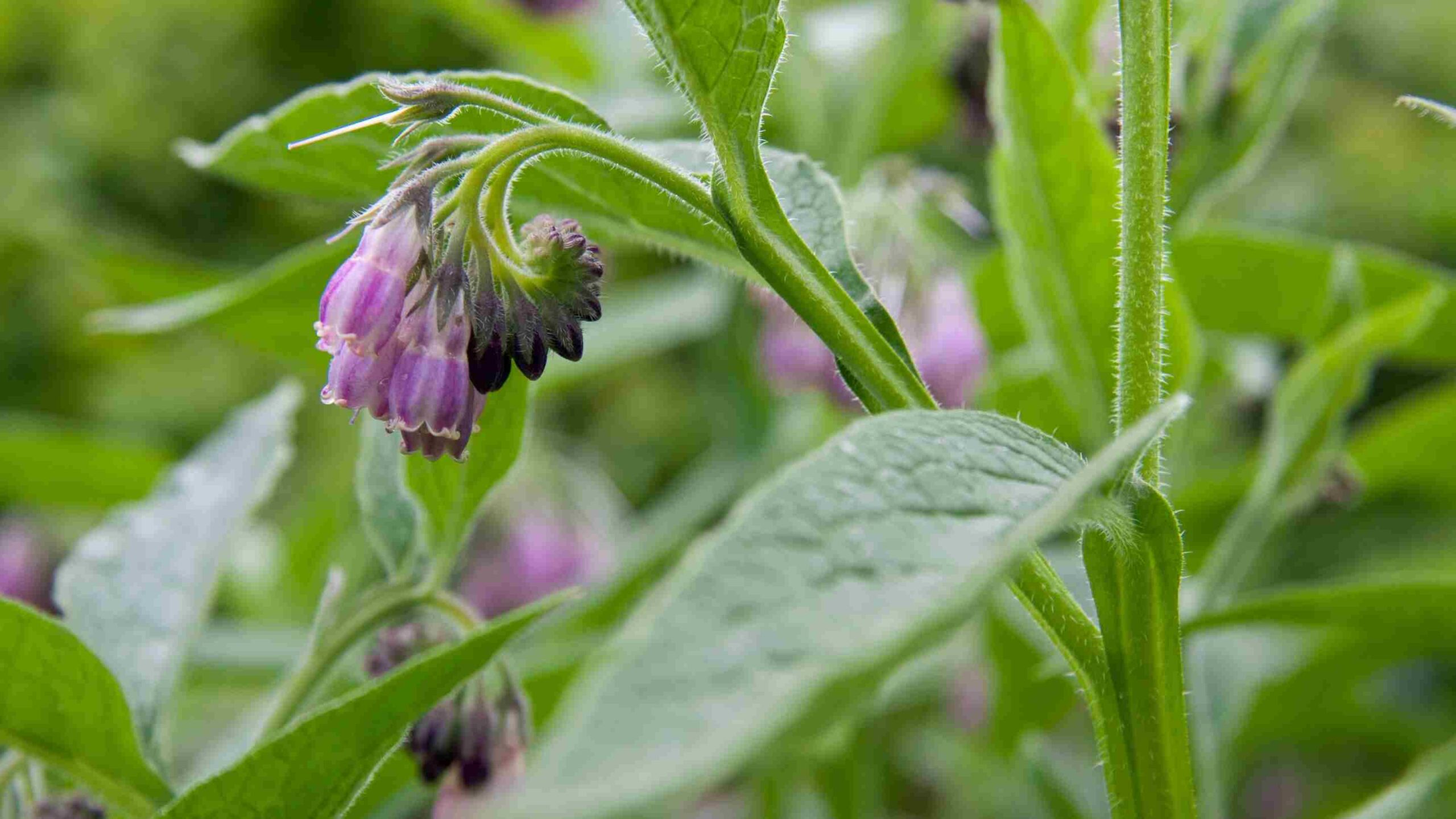
COMFREY (Symphytum officinale; BORAGINACEAE) The word in Latin means “grow together,” alluding to its miraculous power Common names: Knitbone, knitback, healing herb, boneset, bruisewort,...
- Why Comfrey Works!
- Conditions
- Internal Use: What About Liver Toxicity?
- <img class="wp-image-269 alignleft" src="http://herblia.com/wp-content/uploads/2019/03/1929996_437eee2e.jpg" alt="" width="479" height="360" />Where it all started...
- The Pyrrolizidine Alkaloid Double Standard
- Pyrrolizidine Alkaloid Poisoning in History and Research
- Case Study 2: The Emaciated 23-Year-Old with Bizarre Eating Patterns
- Study: Pyrrolizidine Alkaloid Content in Commercial Comfrey Products
- The Whole Plant vs. Isolated Compound Fallacy
- The Striking Absence of Human Evidence
- Conclusion: The Comfrey Persecution
COMFREY (Symphytum officinale; BORAGINACEAE)
The word in Latin means “grow together,” alluding to its miraculous power
Common names: Knitbone, knitback, healing herb, boneset, bruisewort, blackwort, wallwory, consound, gum plant, black root, slippery root, nipbone, yalluc, Schwarzwurz (German), Coswelda, Sinfito (Spanish)
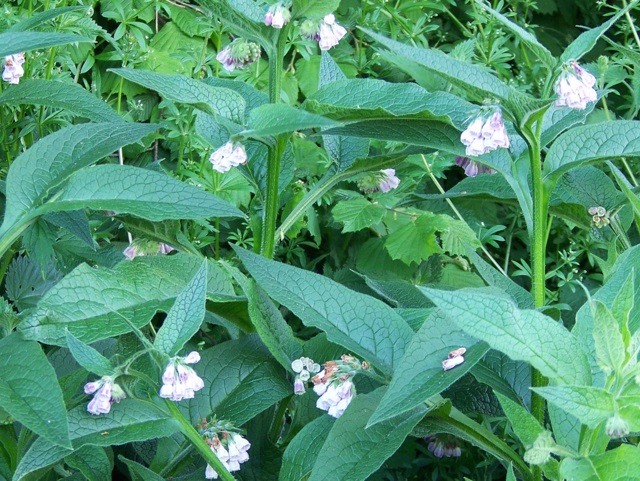
The comfrey plant is a perennial. In fact, it is often considered a pest because it grows so fast, spreads like crazy, and chopping it down only makes it spread more rapidly. But it is anything but a pest! The plant has long been used in England as feed for racehorses—it has also been used for giraffes, which require a large amount of protein. Comfrey contains between 20-30% protein, making it one of the best natural sources of plant protein.
Climate#
Comfrey grows best in direct sunlight and cooler conditions; however, it is very hardy. It can adapt to many soils but does best in fertile, light sand and loams. Comfrey is best grown from roots rather than seeds. Wilted root cuttings should be soaked in cold water until they firm up before planting.
Historical Use:
During ancient Greek and Roman times, Comfrey was used to stop heavy bleeding, treat bronchial issues, and heal fractures and wounds. They used poultices for wounds and tea for internal ailments. Roman herbalist Pliny observed that boiling Comfrey in water produced a sticky paste capable of binding chunks of meat together. As the paste dried, it became a primitive but effective cast—and this is the reason it earned the names knitbone and boneset. On the battlefield, clothes were soaked in this same Comfrey paste and wrapped around broken bones and wounds. The Greek physician Dioscorides in 50 A.D. began to prescribe Comfrey tea internally for respiratory and gastrointestinal issues with good success. He also used the herb for wounds and broken bones.
One early English herbalist recommended that “it helpeth [people] broken the bone of the leg,” and the 17th-century English herbalist Nicholas Culpeper highly recommended Comfrey, stating they were “full of glutinous and clammy juice,” useful for “all inward hurts, and for outward wounds and sores in fleshy and sinewy parts of the body… especially good for ruptures and broken bones.” Culpeper also recommended it for hemorrhoids, fever, gout, gangrene, respiratory, and menstrual problems. The English, Greeks, and Romans considered Comfrey beneficial to the respiratory system.
Mexican midwives to this day apply Comfrey to torn vaginal tissue to quickly heal it. They don’t do it because it doesn’t work! In the Philippines, Comfrey is used to treat Arthritis, Diabetes, Anemia, lung infections (respiratory issues again), and Leukemia.
In America in the 19th-century, Eclectic physicians (akin to Naturopaths of today) prescribed Comfrey for diarrhea, dysentery, cough, bronchitis, and menstrual problems.
Why Comfrey Works!#
Comfrey contains Allantoin, a potent cell proliferator. This natural plant chemical protects the skin, pulls it together (if cut), and promotes new cell growth. The author has seen this in personal experience many times and frequently when used on his horses. Once, one of the mares kicked the other directly in the eye, creating a scar and destroying the hair growth. After 1.5 months of using other herbs, Comfrey was applied to the area, and within 1 week, the hair had grown out. Instead of growing out white as usually happens with these injuries, it grew out the natural color.
Conditions#
Arthritis#
In a German study, 220 people with painful Arthritis of the knee were given either Comfrey cream or a placebo cream, administered at 2 grams, 3 times a day. After three weeks, the Comfrey cream group showed significantly greater pain relief. This experiment was repeated again by another group of Scientists on 142 men with sprained ankles. Again, the Comfrey group reported statistically significant greater pain relief.[1]The New Healing Herbs: The Essential Guide to More than 125 of Nature’s Most Potent Herbal Remedies By Michael Castleman
Internal Use: What About Liver Toxicity?#
It amazes me how quickly word spreads that an herb is toxic. I know countless people taking drugs that are known liver toxins, and they don’t care. You can tell them until you are blue in the face, and they will not stop taking the drug. But tell somebody an herb is a liver toxin, and they are ready to destroy every trace of it from planet earth. Unlike the FDA, this website is based on facts and fact-based research, so let’s take a look at every study that examined Comfrey and determine the facts.
While Comfrey is allowed to be sold in the US and is approved by the German Commission E for external use, it is unlawful to sell it without stating it cannot be ingested internally. This is by a corrupt FDA that legalizes drugs for 10, 20, even 30 years before recalling them after millions of lives are impacted.
 Where it all started…#
In 1984, Australia’s National Health and Medical Research Council placed Comfrey on the nation’s Poison Advisory List. One might reasonably assume that placement on such a list would require substantial and compelling data demonstrating significant harm. However, as will be shown, this assumption is not supported by the evidence.
The U.S. Food and Drug Administration (FDA) followed a similar trajectory. In 2002, the FDA prohibited the sale of Comfrey products marketed for internal use; this is why all Comfrey extracts carry the warning “do not ingest.”
But what precipitated this dramatic regulatory response? What evidence was so compelling that authorities felt compelled to categorically ban internal use of an herb with thousands of years of documented human consumption? The entire case rests on a single fact: Comfrey contains pyrrolizidine alkaloids, compounds that modern medicine—has designated as poisonous.
The Pyrrolizidine Alkaloid Double Standard#
Pyrrolizidine alkaloids are not unique to Comfrey. At least 3% of the world’s flowering plants contain PAs, and everyday dietary items such as honey, grains, milk, and eggs also contain these alkaloids. For example, Australian honey has been found to contain up to 1 mg/kg of PAs, and eggs have been found with 5–168 mg/kg—levels 2–46 times greater than the amount found in a typical daily dose of Comfrey root, the part of the plant considered most “toxic.”[2]https://www.foodstandards.gov.au/publications/documents/TR2.pdf
The Australian report also concedes the following crucial points:
-
The major dietary exposure to PAs arises from grains and eggs, with honey a minor contributor.
-
There are no known reports of cancer in domestic animals caused by PA exposure in their diet, suggesting that chronic dietary exposure does not manifest in recognizable clinical disease[3]https://www.foodstandards.gov.au/publications/documents/TR2.pdf
-
“To date, there is no evidence that PAs are carcinogenic in humans.”[4]https://www.foodstandards.gov.au/publications/documents/TR2.pdf
What absolutely astonishes me is that Australia was so quick to ban Comfrey when they are well aware that “The levels of PAs found in various grain commodities in Australia have ranged from <50 to >6000 µg/kg”[5]https://www.foodstandards.gov.au/publications/documents/TR2.pdf – this is upto 1666 times that of a daily dose of Comfrey root and yet there has been NO action to determine the cause or FIX it. Do you smell a rat? In their defense they do state that the major exposure to pyrrolizidine alkaloids is not Comfrey but grains, eggs and then honey is a minor contributor in their opinion.
Consider this particularly damning admission from the Australian government: “There are also no known reports of cancer in domestic animals caused by exposure to PAs in their diet.” Read that carefully—DIET. This is crucial. When you isolate chemical constituents from a plant and administer them in unnatural forms, you can produce effects that never occur when consuming the whole plant as nature intended. Modern medicine may never learn this lesson.
The Australian report makes another critical observation: “…it would appear that there are important differences in the response of the human liver and other tissues to PAs compared with those in laboratory and domestic animals. To date, there is no evidence that PAs are carcinogenic in humans.[6]https://www.foodstandards.gov.au/publications/documents/TR2.pdf Let me translate: we’ve been conducting animal experiments with isolated alkaloids that don’t reflect what happens in actual human consumption, and we have no evidence these compounds cause cancer in people. Yet the ban stands.
The Hong Kong Analysis: More Damning Evidence#
A risk assessment conducted by Hong Kong’s Centre for Food Safety and Hygiene Department revealed that over 6,000 plant species contain pyrrolizidine alkaloids, with the highest concentrations found in—you guessed it—grains. But here’s the kicker: out of 48 common food items tested, more than half contained detectable PAs. The list includes dried spices, honey, tea leaves, wheat, rye, duck eggs, yogurt, and cheese. According to their findings, honey, tea leaves, and dried spices contained the highest concentrations after grains. [7]https://www.cfs.gov.hk/english/programme/programme_rafs/files/Pyrrolizidine_Alkaloids_in_Food_e.pdf
So if you genuinely wanted to eliminate pyrrolizidine alkaloids from your diet, you’d need to stop consuming all grains, honey, eggs, cheese, yogurt, tea, and dried spices. Sounds absurd, doesn’t it? Yet these foods remain freely available without warning labels or restrictions.
The hypocrisy becomes even more glaring when you examine specific findings. Most teas showed relatively modest PA concentrations, but rooibos tea—say goodbye to your chai lattes—along with verbena, peppermint, and dried spices like cumin, oregano, and tarragon all registered relatively high concentrations. How did the German government respond to these findings? They simply recommended that the public “widen and alternate their teas to avoid excessive exposure.” A gentle suggestion to vary your tea selection. Meanwhile, Comfrey faces absolute prohibition. Does something smell rotten? I think so.
The Hong Kong study concluded: “The findings of the dietary exposure to total PAs in the present study did not provide sufficient justifications to warrant changes to the basic dietary advice on healthy eating.” This conclusion was reached despite PA concentrations equal to or exceeding those associated with Comfrey. The question remains: Why was Comfrey banned while these dietary exposures were permitted to continue?
Pyrrolizidine Alkaloid Poisoning in History and Research#
Historical outbreaks of PA toxicity overwhelmingly occurred in malnourished populations consuming PA-contaminated grains in large quantities over long periods of time. These conditions are fundamentally different from controlled herbal use.
What follows is a critical examination of the studies commonly cited to justify the prohibition of Comfrey.
Case Study 1: Veno-occlusive Disease of the Liver Secondary to Ingestion of Comfrey
British Medical Journal Vol. 295, 18 July 1987#
In July 1986, a 13-year-old boy was admitted to hospital for investigation of hepatomegaly (liver enlargement) and ascites (abdominal fluid accumulation). Three years prior, he had been diagnosed with Crohn’s disease based on radiographic evidence showing characteristic changes in his terminal ileum and colon. His treatment regimen included Prednisolone and Sulphasalazine, which he received for at least a month before June 1986.
At his parents’ request, these pharmaceutical drugs were discontinued, and he began treatment with acupuncture and Comfrey root prescribed by a naturopath. The timeline becomes murky here, but apparently in 1986—while taking Prednisolone and Sulphasalazine—he developed fatigue, diarrhea, and began losing weight. Several weeks later, he developed fever, abdominal pain, and swelling. Laboratory tests revealed iron deficiency and elevated serum bilirubin. He was subsequently treated with spironolactone.
Let’s examine what this paper actually reveals:
The authors state: “Only two cases of hepatic veno-occlusive disease as a result of pyrrolizidine alkaloid ingestion have been described in Britain.”[8]BMJ 1987;295:183
Only TWO cases in the entire history of Britain allegedly caused by PA poisoning. For perspective, Aspirin kills approximately 3,000 Britains annually.[9]Aspirin killing 3,000 Brits A YEAR as docs blame popping pills daily for 20,000 ‘major bleeds’ annually Yet I don’t see protesters storming government offices demanding Aspirin prohibition, despite it being a documented liver toxin.
Throughout this paper, the language is remarkably tentative. The authors repeatedly use phrases like “we think,” “may have,” “possibly,” and other non-conclusory terminology. In essence, by their own admission, they cannot definitively prove causation. This is the foundation upon which Comfrey’s reputation was destroyed.
But let’s dig deeper into the medications involved:
The question is, how many of the meds and treatments used are toxic? For example, Prednisolone causes Acute Lymphoblastic Leukemia in children, a condition affecting white blood cells that would directly impact iron levels—precisely one of the abnormalities noted in this boy.[10]The adverse effect of prolonged prednisolone pretreatment in children with acute lymphoblastic leukemia More damning still: Sulphasalazine is a known hepatotoxin that causes hepatic failure. In one documented case, a 12-year-old girl—notably the same age as our Comfrey case—was given Sulphasalazine and subsequently experienced complete liver failure.[11]Successfully treated sulphasalazine-Induced fulminant hepatic failure, Thrombocytopenia and Erythroid Hypoplasia with intravenous immunoglobulin Was Sulphasalazine banned following this incident? Of course not. They call it a “rare adverse effect.” Another study documenting acute Sulphasalazine hepatotoxicity describes a symptom constellation remarkably similar to our Comfrey boy’s presentation: fatigue, diarrhea, and fever.[12]Acute sulphasalazine hepatotoxicity The parallels are impossible to ignore.
The evidence becomes even more clear:
A report in the British Medical Journal (Vol 289, September 1984) describes a 22-year-old man with ulcerative proctitis—an inflammatory bowel disease closely related to the Crohn’s disease afflicting our young Comfrey patient. Like the boy, this man was prescribed both Prednisolone and Sulphasalazine. Unlike the boy, he took absolutely no Comfrey. Four weeks after starting these medications, he was admitted to hospital with a severely enlarged liver.[13]Bone marrow necrosis after treatment with sulphasalazine This case proves definitively that liver enlargement can result from Prednisolone and Sulphasalazine alone, without any Comfrey involvement whatsoever. Perhaps—and I’m just speculating here—the pharmaceutical drugs known to cause liver toxicity actually caused the liver toxicity? Interestingly, both patients—the Comfrey boy and this Sulphasalazine-only case—were from Jamaica. Perhaps we should ban Jamaica while we’re engaging in this exercise of irrational scapegoating. At what point do we stop and realize that regulatory bodies do not ban herbs for our good?
The evidence continues to mount:
In 1982, the Deputy Head of the Division of Tissue Pathology at the Institutes of Medical and Veterinary Science published documented cases of hepatotoxicity caused by Sulphasalazine—not Comfrey, but the pharmaceutical drug. Two cases are particularly interesting:
In the first, hepatotoxicity manifested after initial drug administration. In the second, liver damage only appeared after re-exposure three weeks later. But here’s the truly alarming finding: not only did these patients develop liver abnormalities, but they experienced LIFE-THREATENING NEUROTOXICITY with every single dose.[14]Combined Hepatotoxicity and Neurotoxicity following Sulphasalazine Administration
One might reasonably expect that the discovery of such profound toxicity would prompt immediate FDA prohibition of this dangerous drug. But no—unlike Comfrey, this documented poison receives the benefit of the doubt. The authors actually describe Sulphasalazine as “a valuable drug.” Valuable to whom, exactly? Assassins? I was under the impression that when we identify hepatotoxic poisons, we ban them. Apparently, that principle applies only to herbs with millennia of safe traditional use, not to patented pharmaceuticals generating substantial profits.
And here’s the final piece of evidence from the study: in the first case from this 1982 study, the patient was taking both Sulphasalazine AND Prednisolone together—the exact combination our Comfrey boy received. Wild speculation here, but what if the known liver-toxic drugs the boy was taking actually caused his liver problems?
Summary of Case 1:
Both pharmaceutical drugs administered to the boy who consumed Comfrey are documented hepatotoxins. Together, they appear to create a particularly potent liver-destroying combination. Multiple clinical cases demonstrate these drugs’ direct involvement in liver toxicity and hepatic enlargement specifically—not isolated incidents, but a clear pattern. We have established that the FDA’s concern about liver toxicity is remarkably selective, applying harsh standards to herbs while giving pharmaceutical toxins a free pass. This strongly suggests the Comfrey ban has nothing to do with protecting public health.
These findings don’t necessarily prove Comfrey is safe—that’s not the point. They prove that the pharmaceutical drugs are known hepatotoxins, which means this case cannot legitimately be cited as evidence of Comfrey toxicity. The variables are hopelessly confounded.
Case Study 2: The Emaciated 23-Year-Old with Bizarre Eating Patterns#
“Hepatic veno‐occlusive disease associated with comfrey ingestion”
Mee Ling Yeong, Boyd Swinburn, Mark Kennedy, Gordon Nicholson – First published March 1990
Ready for another alleged Comfrey-induced veno-occlusive disease case? This one involves a 23-year-old man who actually died of liver failure, making it particularly important to examine closely.
This case immediately reveals red flags that should disqualify it as legitimate evidence. The patient is described as having “binge-like appetite” patterns where he would consume exclusively a single food—such as grapes or cashew nuts—for days or even weeks at a time. Basic nutritional knowledge tells us that this behavior is inherently dangerous to the liver and deprives the body of essential nutrients. You cannot maintain adequate nutrition subsisting solely on cashews for a week.
During the 1-2 weeks preceding his acute symptoms, he consumed a diet consisting of young comfrey leaves, steamed and eaten as a vegetable. He reportedly ate 4-5 leaves daily for this brief period. Additionally, he used marijuana, which has been implicated as a potential hepatotoxin.[15]Possible hepatotoxicity of chronic marijuana usage
Here’s the critical detail: When found, he was emaciated—a clear indicator of severe malnutrition. Malnutrition is directly and causally linked to liver disease.[16]Malnutrition in end-stage liver disease: Recommendations and nutritional support
It is considered fundamentally unsound medical research practice to use severely malnourished, emaciated subjects to establish efficacy or toxicity of any substance. Consider: feed a malnourished person large quantities of potatoes, observe their recovery, and you could market potatoes as a miracle cure. Conversely, feed them excessive amounts of a healthy food and you will observe their decline, and you could declare any food toxic. This is not valid scientific methodology—it’s manipulation of compromised subjects to produce predetermined conclusions.
According to the authors of this very paper: “Comfrey is widely used, but this is only the third documented patient with associated veno-occlusive disease.”[17]Yeong ML et al. Med J Aust. 1990 Mar 5;152(5):229-31
The first case involved a 13-year-old boy taking documented liver-toxic pharmaceutical drugs that, in other cases, produced liver enlargement without any Comfrey involvement. The second case features a severely malnourished, emaciated man with pathological eating patterns who consumed only single foods for extended periods and also used marijuana. Neither case provides remotely conclusive evidence of Comfrey toxicity.
Study: Pyrrolizidine Alkaloid Content in Commercial Comfrey Products#
“Determination of Pyrrolizidine Alkaloids in Commercial Comfrey Products (Symphytum sp.)”
Joseph M. Betz, Robert M. Eppley, Wendell C. Taylor, Denis Andrzejewski – J Pharm Sci. 1994 May;83(5):649-53
This study provides crucial data often ignored in discussions of Comfrey safety. Researchers found that Comfrey leaf products combined with other herbs contained the lowest PA content—as minimal as 0.1 parts per million (ppm).
This finding aligns with the practice of Dr. John Christopher, the renowned herbalist who incorporated Comfrey into nearly every formula. Dr. Christopher reserved Comfrey root exclusively for external applications; for internal use, he always employed Comfrey leaf.
The highest PA concentrations were detected in bulk Comfrey root, with maximum levels reaching 400ppm. Since 1ppm approximately equals 1mg/kg,[18]https://cfpub.epa.gov/ncer_abstracts/index.cfm/fuseaction/display.files/fileid/14285 a concentration of 0.1ppm represents an extraordinarily low PA level—significantly lower than the PA contamination levels found in grains, yogurt, and eggs that remain completely unregulated.
J.A. Pembrey, in The Safety of Comfrey, makes this definitive statement: “there appear to be no cases, in medical history or veterinary records, of humans or animals showing clinical symptoms of pyrrolizidine alkaloid poisoning from the consumption of Comfrey.”[19]Pembrey JA. The Safety of Comfrey
The Whole Plant vs. Isolated Compound Fallacy#
Regulatory agencies systematically ignore a fundamental principle of plant pharmacology: the toxicity profile of isolated, purified chemical constituents often bears little resemblance to that of the whole plant matrix. The Australian government itself acknowledges this, stating: “there are important differences in the response of the human liver and other tissues to PAs compared with those in laboratory and domestic animals.”[20]https://www.foodstandards.gov.au/publications/documents/TR2.pdf
The overwhelming majority of animal studies demonstrating PA toxicity employed either highly purified, isolated alkaloids or synthetic PA derivatives administered via injection—routes and forms that bear no resemblance to traditional human consumption of whole comfrey leaf. A 2023 study revealed that when isolated intermedine or lycopsamine were tested individually on cell cultures at 75 μg/mL, cell viability declined to 47% and 48.8% respectively. However, when a mixture of both compounds was applied at identical concentration, cell viability plummeted to only 32.9%, suggesting potential synergistic toxic interactions that may not reflect the complex biochemical matrix present in whole plant material.[21]LC-MS/MS Evaluation of Pyrrolizidine Alkaloids Profile in Relation to Safety of Comfrey Roots and Leaves from Polish Sources. Molecules. 2023;28(16):6171
Critically, comfrey contains numerous bioactive compounds beyond pyrrolizidine alkaloids, including allantoin, rosmarinic acid, salvianolic acids, and various polyphenols exhibiting significant antioxidant and anti-inflammatory properties. A 2018 study titled “Is comfrey root more than toxic pyrrolizidine alkaloids?” identified multiple salvianolic acids and other antioxidant polyphenols in comfrey root demonstrating substantial protective effects. The therapeutic properties of whole comfrey cannot be reduced merely to its PA content.[22]Is comfrey root more than toxic pyrrolizidine alkaloids? Salvianolic acids among antioxidant polyphenols in comfrey (Symphytum officinale L.) roots. Trifan A, et al. Food Chem Toxicol. 2018 … Continue reading
The Striking Absence of Human Evidence#
Despite millennia of widespread comfrey use across diverse cultures worldwide, documented cases of actual human toxicity remain extraordinarily rare—a fact that speaks volumes. A comprehensive 2019 review noted bluntly: “there are no clinical studies showing the link between PAs and liver toxicity when comfrey is taken at typical doses by healthy humans.”
A 2001 analysis by Stewart and Steenkamp examining pyrrolizidine poisoning in human toxicology found that most documented cases involved either contamination of staple foods in developing nations or misidentification of plants (toxic species mistaken for comfrey). They noted the conspicuous absence of toxicity reports despite extensive historical use, characterizing this as “a neglected area in human toxicology”—neglected precisely because the anticipated epidemic of poisoning cases never materialized.[23]Pyrrolizidine poisoning: a neglected area in human toxicology. Stewart MJ, Steenkamp V. Ther Drug Monit. 2001 Dec;23(6):698-708
Conclusion: The Comfrey Persecution#
The evidence assembled here establishes several incontrovertible points:
First: The most frequently cited human cases of alleged comfrey toxicity are fundamentally flawed. They involve patients taking multiple documented hepatotoxic pharmaceutical drugs that have, in other cases, caused liver damage without any comfrey involvement. Others involved severely malnourished, emaciated individuals with pathological eating patterns and concurrent marijuana use.
Second: Pyrrolizidine alkaloids pervade the food supply at levels equal to or exceeding those found in comfrey preparations. Grains, honey, eggs, dairy products, common teas, and cooking spices all contain significant PA levels. Yet only comfrey faces prohibition.
Third: Contemporary research demonstrates conclusively that topical comfrey preparations pose no verifiable risk due to minimal absorption of pyrrolizidine alkaloids.
Fourth: The vast majority of toxicity studies employed isolated, purified PAs administered in ways that bear no resemblance to traditional human consumption of whole comfrey leaf. The synergistic and protective effects of the complete plant matrix are systematically ignored.
Fifth: Despite millennia of widespread human use across diverse cultures, actual documented cases of comfrey-induced toxicity remain extraordinarily rare and questionable.
The regulatory response to comfrey is grotesquely disproportionate to any actual evidence of harm. This disparity becomes even more unconscionable when compared to the permissive treatment of pharmaceutical drugs with well-documented hepatotoxicity and common foods containing equivalent or substantially higher PA concentrations.
References